What is EMDR?
EMDR (Eye Movement Desensitization and Reprocessing) is a structured, eight-phase psychotherapeutic approach recognised internationally by public health bodies. It combines the ordinary talk-based work of therapy with brief sets of bilateral stimulation, a stimulus that alternates from one side of the body to the other: eye movements, sounds or taps. This guide describes how the method works. It does not promise a result.
The eight phases run from history-taking and preparation through closing each session and reviewing progress at the start of the next one. Bilateral stimulation is used mainly in the middle phases, while the person holds a specific memory in mind; the rest of the process is conversation between therapist and patient, the same as in any other psychotherapeutic approach. The sequence of phases is the same for any EMDR-trained therapist, though the pace and length of each phase vary by person and by what brought them in.
- With bilateral stimulation
- Mostly conversation
History
Your therapist learns your history and what brings you in.
Preparation
They explain the process and you practise a calming resource, sometimes with slow stimulation.
Assessment
Together you choose one specific memory to work on.
Desensitisation
Short sets of bilateral stimulation on that memory.
Installation
Short sets to strengthen a belief about yourself you chose.
Body scan
You check for tension left in the body when you think of the memory.
Closure
Every session ends with the calming resource.
Re-evaluation
The next session starts by reviewing what changed.
Who can offer EMDR is a different question from who can practise psychology in general: a licence covers the second, and EMDR-specific training is a separate, optional course, taken afterwards on its own. Our guide on choosing a therapist covers that distinction in more detail, and every verified profile in the directory shows both facts separately. Basic EMDR training runs two parts of three consecutive days, eight hours each day, with five hours of required supervision after each part: supervised practice begins between the two parts, not only once the whole training is finished.
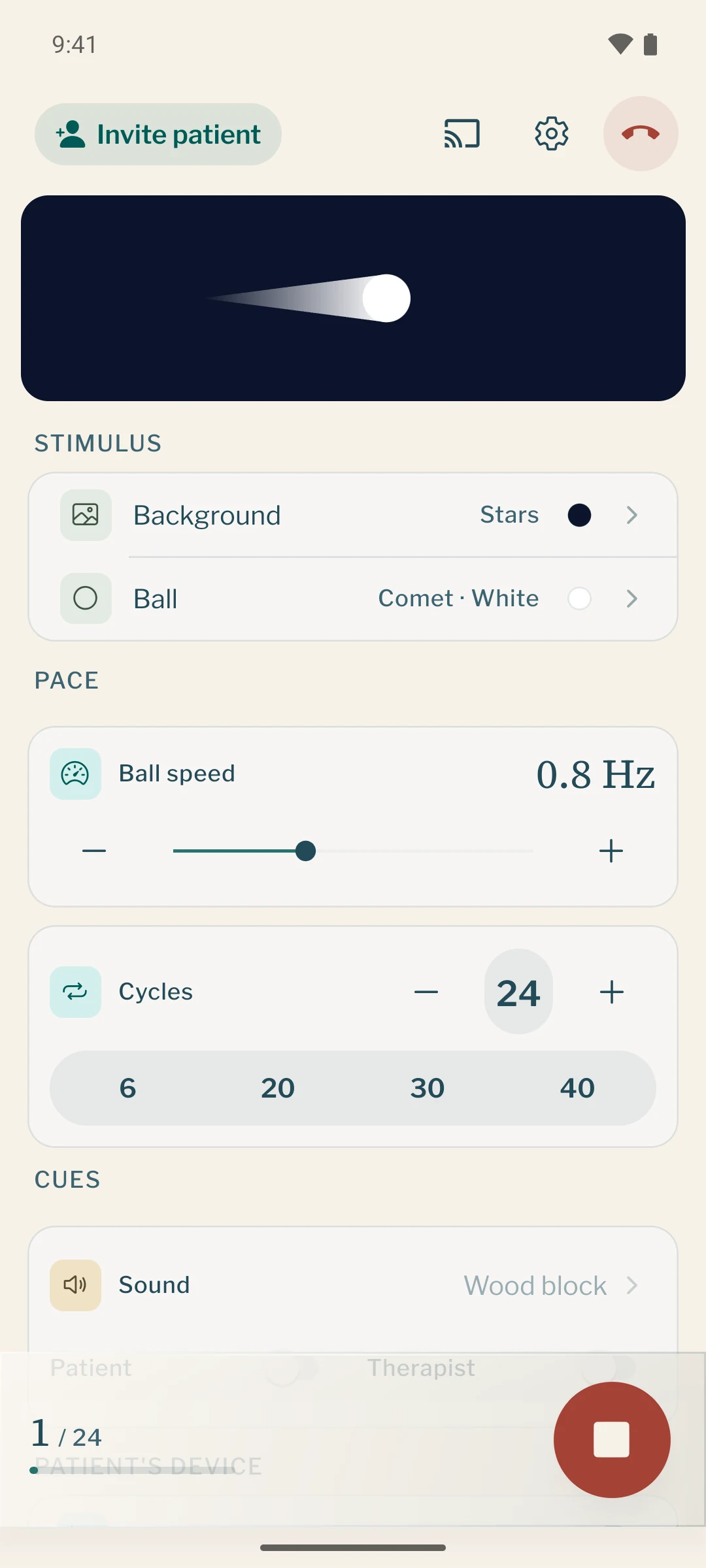
Speed and stimulus type aren’t fixed. In the preparation phase, sets sometimes run short and slow to practise a calming resource, an image or exercise to come back to if something gets hard. In the middle phases they usually run closer to about one round trip per second, paced to what the person can comfortably track.
Is EMDR for me?
People come to EMDR after a single hard event: an accident, a sudden loss, a situation of violence. They also come with things that don’t look serious on their own but leave a mark when they last for years: demands that never let up, constant criticism, the feeling that nothing is ever enough.
Many EMDR therapists also work with anxiety, panic attacks, grief and burnout. Each profile lists the reasons that therapist works with.
Whether EMDR is right for you is decided in a first consultation, with the therapist. You don’t need a diagnosis, or to tell your whole story, to write to one.
What do professional bodies say about EMDR?
Several international health bodies include EMDR among the psychotherapies with evidence for post-traumatic stress, and EMDR’s own professional organisations rank the training levels a therapist can reach in this psychotherapy model. This directory doesn’t produce that evidence or weigh it: we check each therapist’s licence and EMDR training, with the date of each check, and cite the primary sources below.
What the institutions say
The World Health Organization published its guidelines for the management of conditions specifically related to stress in 2013, including EMDR among the recommended psychotherapies for post-traumatic stress disorder in adults. The Latin America and Caribbean EMDR Alliance (EMDR ALAC) and its national associations certify the levels in this model: basic training requires a current professional licence; certified therapist status requires two years of practice with EMDR, fifty sessions with at least twenty-five patients and twenty hours of supervision; supervisor (or consultant) status, certified by EMDR IBA Argentina, requires three years of practice, three hundred sessions with at least seventy-five patients and twenty hours of supervision-of-supervision; and trainer status, in effect since 2022, requires being certified as both therapist and supervisor and having facilitated at least four complete basic trainings.
Evaluating treatments isn't this site's job: we show what the primary sources say, so you can decide with your own judgment and your therapist's.
That training is one of the two checks we make before publishing any profile in the directory, with the licence. You can read the detail on how we verify each of those documents and what a verified profile actually means.
You can weigh that against what each therapist tells you in a first consultation: how long ago they trained, what level they’ve reached, and what kind of concerns they’ve worked with before. No level on that ladder is better than another for your particular situation. They’re facts for you to weigh.
What does an EMDR session look like?
A session moves in short stimulation sets, roughly twenty to forty seconds each, separated by a pause. The therapist marks when each set starts and stops and asks what you notice; you answer in a sentence or two, without the therapist interpreting it in that moment. Every so often the therapist returns to the starting memory before the next set begins.
Between one set and the next, the therapist adjusts the speed and the type of stimulus, visual, audio or tactile, based on how you’re responding; those changes happen in the pauses, never mid-set. You can ask to switch the type of stimulus at any point: some people find a sound or a tap more comfortable than following a point with their eyes.
It’s common for the first session, or even the first two, to include no bilateral stimulation at all: they’re spent taking a history, explaining the process, and practising a calming resource to return to if needed. Only after that do you and your therapist choose the first specific memory to work on.
The therapist usually closes each session with a calming resource, whether or not the work on that particular memory is finished. Whatever’s left picks up at the start of the next session, before moving on to anything new. No session promises a fixed number of times you’ll need to come back: that’s something you work out with your therapist as the process goes on.
And bilateral stimulation at a distance?
Some therapists use an app for bilateral stimulation. Your therapist runs it from their phone or computer, and you follow it on your own device: a phone, a computer or a TV. It works in the consulting room and at a distance. You join with a link, a code or a QR code, without creating an account.
If you’re interested, ask your therapist whether they use it. In the directory, profiles with the app show it like this: